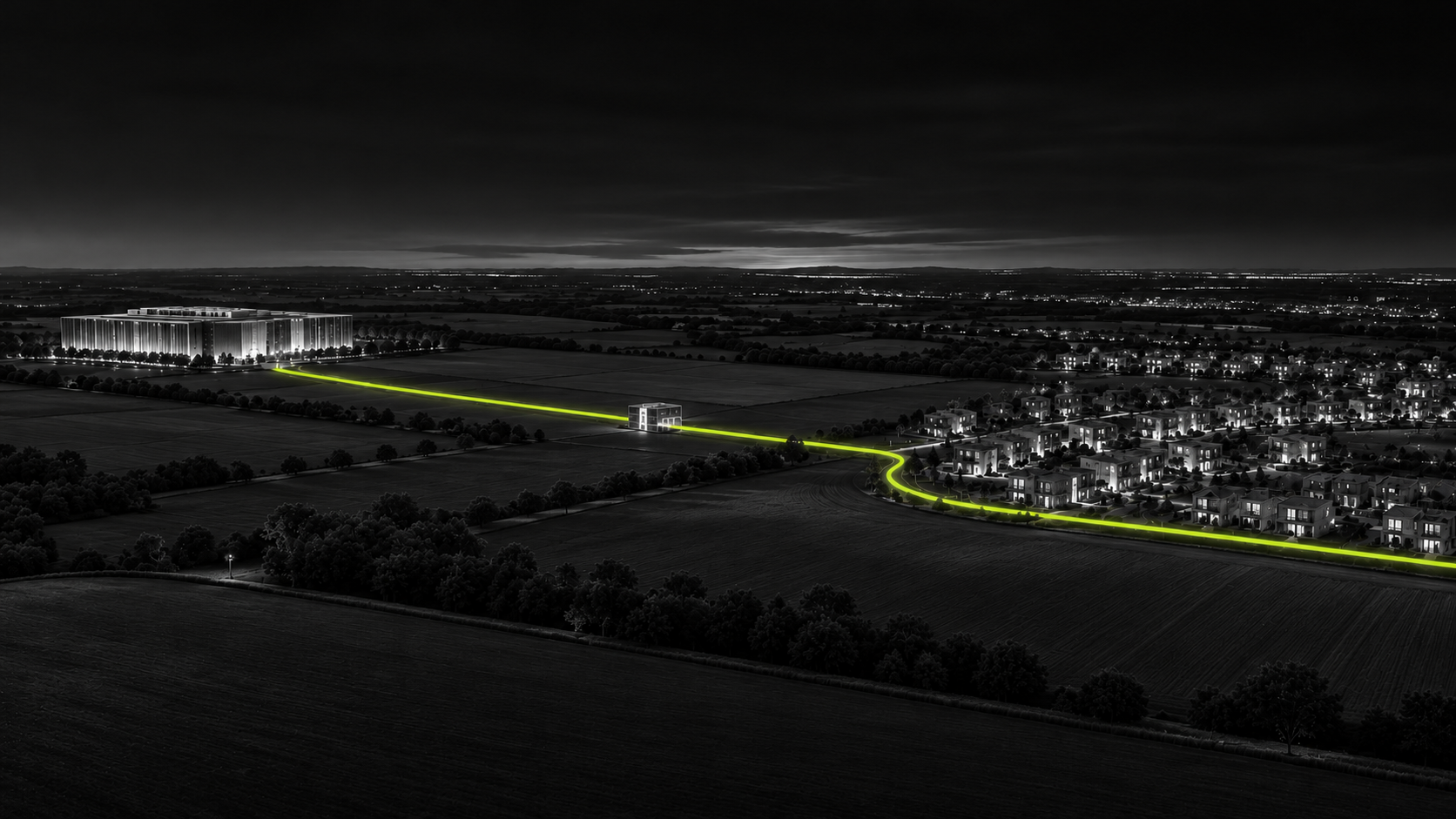
Bridging the gap between the developer and the community
WHO WE ARE
Edge of Space is a community investment and place-shaping advisory. We help developers and investors make major developments a source of lasting value for the communities around them.
Through local research and engagement with residents, businesses and local authorities, we build a clear picture of what a place needs and what people want for its future. We translate that evidence into a targeted community investment strategy that identifies where investment can make the greatest difference, who to partner with and which initiatives to prioritise. From local skills programmes to shared infrastructure, each initiative is tied to a local priority and a clear measure of success.
THE CHALLENGE
Delivering growth through development can bring significant benefits, but it also presents real challenges - for communities, investors and the local environment
Community concerns
From pressure on local energy and water supplies to noise and visual impact - communities want to see tangible local benefits.
Regulatory complexity
Navigating planning, policy and infrastructure requirements is increasingly challenging.
The need for collaboration
Success depends on bringing together investors, developers, councils and communities.
Economic uncertainty
Balancing investment, long-term viability and local value is more important than ever.
Environmental pressure
Development must support net zero, biodiversity and climate resilience.
THE OPPORTUNITY
“Development should create value beyond what gets built”
A data centre, energy project or major regeneration scheme can create opportunities for the people and businesses around it. Those opportunities come from decisions the project is already making: who it buys from, what skills it will need, how infrastructure is designed and what spaces it can share. The earlier those decisions are informed by local priorities, the more scope there is to create benefits that last beyond construction.
Skills and career pathways
A development’s future workforce needs can inform partnerships with local schools, colleges and training providers. For a data centre, that might mean introducing students to engineering and digital infrastructure, creating apprenticeships with contractors, or helping local people gain the qualifications needed for permanent operations roles.
Opportunities for local businesses
Major projects buy everything from construction services to catering, maintenance and facilities support. Giving local businesses early visibility of upcoming contracts and the standards they’ll need to meet gives them time to prepare and a better chance to compete. Where specialist capabilities are needed, partnerships with larger suppliers can help local firms build experience they can use on future projects.
Infrastructure that serves a wider area
Some assets can serve both the development and its neighbours. Where there is a viable heat source and nearby demand, waste heat from a data centre could supply a district heat network serving homes, schools or public buildings. Elsewhere, the most useful investment may be better walking and cycling links, improved transport connections or infrastructure that supports a wider regeneration plan.
Places people can use
Investment around a site can improve how people move through and use the surrounding area. That could mean creating a safer route to a school, improving a public space or supporting a community facility with a clear plan for who will manage it and how it will be funded over time.
Turning local priorities into an investment plan
Edge of Space starts by listening to residents, businesses and local authorities and examining what is already planned for the area. We then assess which opportunities the development is well placed to support, what they would cost and who could help deliver them. The resulting strategy gives developers and investors a clear basis for choosing what to fund, making commitments they can deliver and measuring what changes for local people.

SECTORS
Where we create value
We focus on the critical infrastructure and major developments shaping the future of our economy, strengthening national resilience and transforming the built environment. These sectors are fundamental to long-term growth, technological advancement and the changing needs of society, representing significant investment, complex development challenges and opportunities for generations to come.
DIGITAL INFRASTRUCTURE & DATA CENTRES
The infrastructure behind a connected world
From hyperscale data centres and cloud infrastructure to artificial intelligence and advanced computing facilities, the sector is experiencing unprecedented demand. Rapid expansion brings complex requirements around power, land, planning and integration with surrounding communities.
DEFENCE
Infrastructure of national importance
Defence infrastructure is fundamental to national security, operational readiness and technological advancement. From secure facilities and advanced manufacturing to drone production, testing facilities and autonomous systems, investment in the sector is strengthening sovereign capability, accelerating innovation and supporting the next generation of defence technologies.
ENERGY & UTILITIES
Securing the infrastructure that powers our future
Reliable energy and utility networks are essential to economic stability, industrial growth and everyday life. Increasing electricity demand, energy security requirements and the transition to cleaner generation are driving the need for new infrastructure, from nuclear power and renewable energy to grid reinforcement and modern utility networks.
REAL ESTATE & REGENERATION
Reimagining how places function and thrive
Real estate and regeneration shape the places where people live, work and connect. Investment in housing, commercial districts, mixed-use destinations and urban renewal is essential to responding to population growth, changing economic needs and the evolution of our towns and cities. Well-planned regeneration can unlock underused land, improve connectivity and establish new centres of activity.